
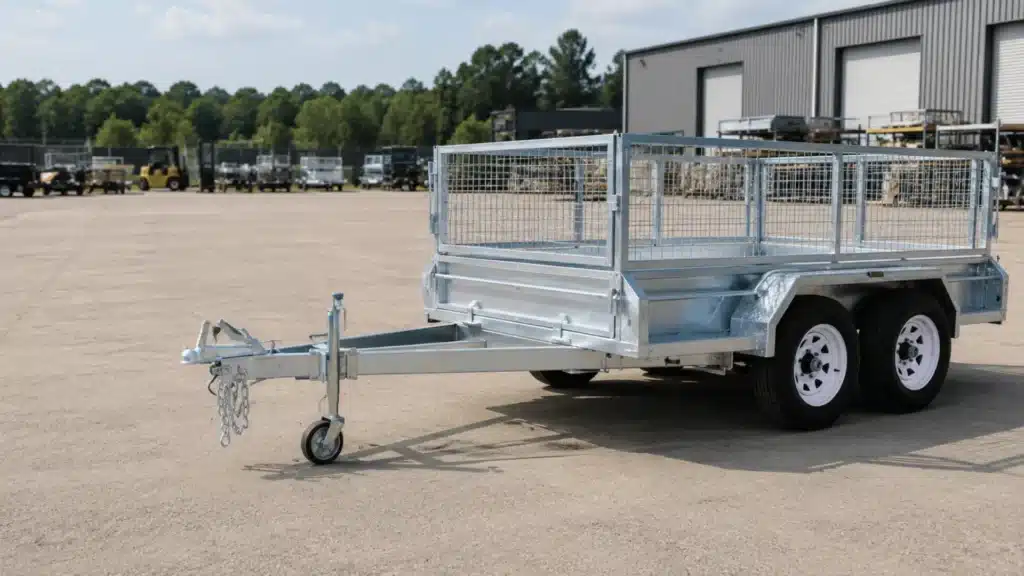
Hauling heavy loads that need maximum stability and carrying capacity calls for a heavy duty tandem trailer with dual axles. This becomes vital for commercial and trade operations. Tandem axle trailers feature two axles positioned one behind the other. They deliver superior balance and load-bearing capability compared to single-axle models. A 2000kg capacity tandem trailer suits lighter commercial use. A 3200kg model handles heavy machinery and construction equipment.
Loading capacities in tandem trailers of all types vary from 1392kg to 1535kg typically, with tare weights between 465kg and 608kg. In this piece, we’ll walk you through the types of heavy duty tandem trailers available and important features. You’ll also learn how to select the right tandem axle trailer for your specific hauling needs.
Types of Heavy Duty Tandem Trailers Available

Heavy duty tandem trailers come in several distinct configurations. Each is built for specific hauling applications. Selecting the right type depends on your cargo requirements and operational conditions.
Box trailers feature enclosed sides that contain loads during transport. Sizes range from 8×5 models with 2000kg ATM to 10×6 configurations rated at 1990kg ATM. These work well for loose materials like soil and rubble, and garden waste where side walls prevent spillage. Many models include removable cages (600mm or 900mm height) and checker plate flooring for durability.
Flat top trailers provide open platforms without fixed sides. They suit oversized items like vehicles and machinery, plus irregular loads. ATM options span from 1200kg to 4490kg with deck sizes from 6×4 up to 19×8. Ramp and hydraulic tilt models simplify loading operations.
Tipper trailers incorporate hydraulic tipping mechanisms that allow controlled unloading of bulk materials. Tandem axle configurations offer improved stability for heavy loads like gravel and sand. Single axle designs handle up to 1400kg. Large dual axle models with upgraded brakes reach 4500kg capacity.
Off-road variants feature heavy duty chassis construction with high clearance wheel arches and large mud terrain tires. Independent suspension systems handle rough terrain.
Key Features to Look for in a Heavy Duty Tandem Axle Trailer
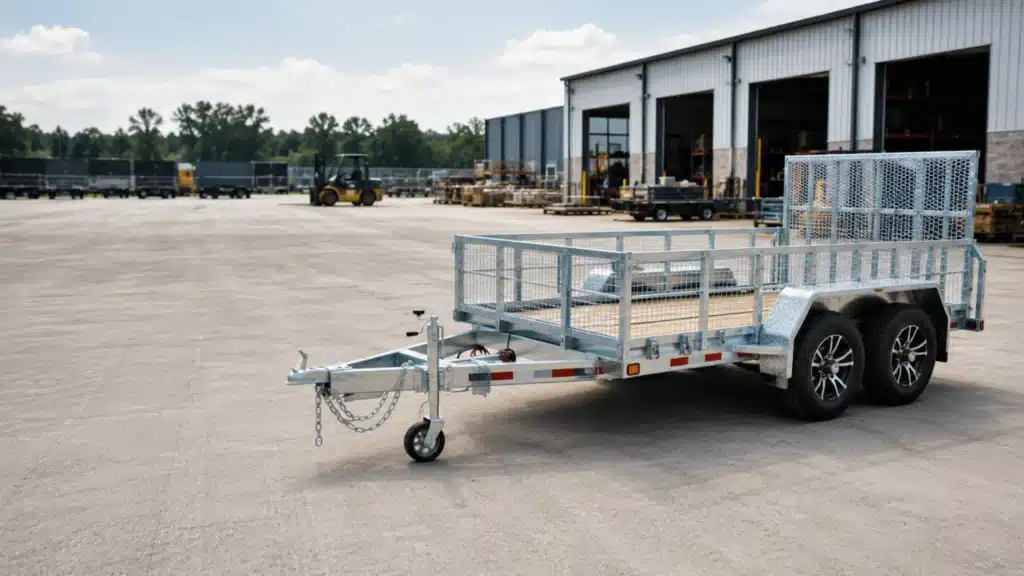
Selecting the right heavy duty tandem axle trailer requires evaluating several technical specifications that affect hauling capability and safety. Weight ratings are the foundations of your decision. ATM (Total Trailer Mass) represents the maximum combined weight of trailer and load when unhitched. GTM (Gross Trailer Mass) indicates weight on the axles when coupled. Payload capacity equals ATM minus tare weight.
Braking systems separate adequate from exceptional performance. Electric brakes remain standard for tandem axle trailers exceeding 2000kg GTM. Both axles require brakes for the best stopping distance. Hydraulic disk brake systems handle loads up to 4500kg and provide better performance in tough conditions. Breakaway systems are a legal requirement for trailers with brakes. They engage automatically if the trailer detaches.
Suspension configuration affects ride quality and load distribution. Rocker roller systems deliver the smoothest load transfer between axles. This makes them ideal for heavy applications. Slipper springs suit heavy multi-axle setups. Eye-to-eye springs work best for lighter applications.
Protection features extend service life. Hot-dip galvanizing provides sacrificial corrosion protection. It lasts 20 to 40 years in high-corrosion environments. Heavy duty tandem trailer fenders crafted from 16-gage steel offer splash resistance. Commercial-grade aluminum diamond plate protects vulnerable areas from road debris.
How to Choose the Right Heavy Duty Tandem Trailer for Your Needs
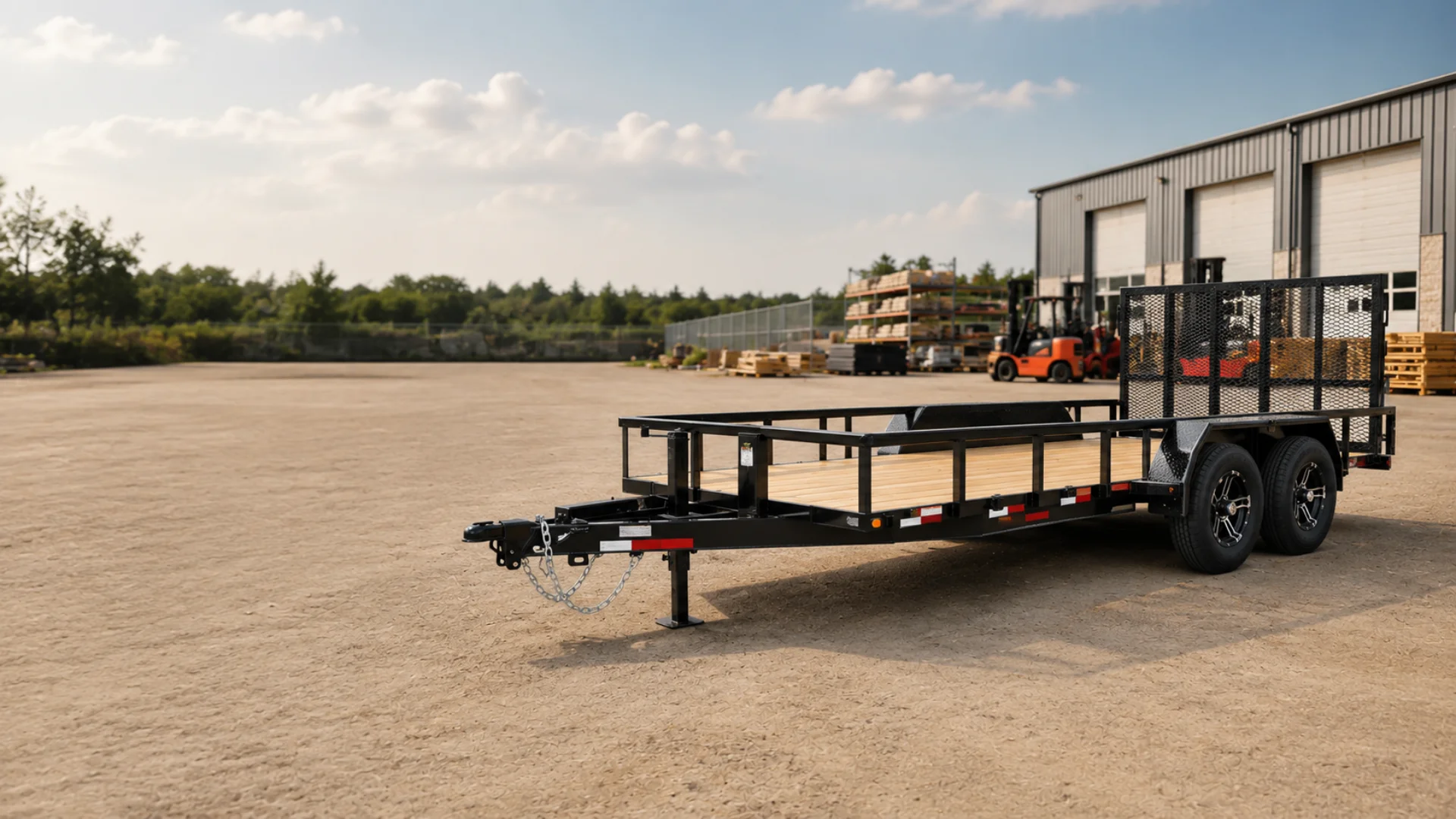
You need to match your heavy duty tandem trailer to your tow vehicle. Start by checking your owner’s manual for towing capacity, GVM (Gross Vehicle Mass), and GCM (Gross Combination Mass) specifications. Your vehicle’s braked towing capacity must exceed the trailer’s ATM. Vehicles manufactured before 1 January 1992 without specified towing capacity should use 1.5 times the vehicle’s unloaded mass for braked trailers or a maximum of 750kg for unbraked models.
You can find payload capacity by subtracting tare weight from ATM. To name just one example, a trailer with 700kg tare mass and 2000kg ATM carries up to 1300kg of cargo. Basic Trailers designs tandem trailers with ATM ratings from 2000kg to 3500kg for heavy-duty applications of all types. Tandem axles suit medium to heavy-duty requirements, and single-axle configurations work for lighter loads.
Terrain influences your choice by a lot. Rough terrain demands reinforced frames and heavy-duty axles with increased ground clearance. Trailer length affects functionality. Longer models transport vehicles and machinery, while shorter configurations suit tools and equipment.
Budget matters, but build quality determines long-term value. Cheaper options may need more repairs over time. Think over maintenance requirements before purchasing. Frequent off-road use on dirt roads increases wear on axles, bearings, and coupling mechanisms.
Conclusion
Choosing the right heavy duty tandem trailer comes down to matching your vehicle’s towing capacity and selecting features that suit your specific hauling conditions. We’ve covered the trailer types you need, from box and flat top to tipper configurations, as well as the critical specifications you need to review.
The right tandem axle trailer represents a major investment in your operation’s efficiency. Take time to assess your actual needs, compare ATM ratings and choose quality construction that will deliver reliable performance for years to come.
FAQs
ATM (Aggregate Trailer Mass) represents the maximum combined weight of the trailer and load when unhitched, while GTM (Gross Trailer Mass) indicates the weight on the axles when the trailer is coupled to a vehicle. Your payload capacity is calculated by subtracting the tare weight from the ATM rating.
Yes, electric brakes are standard for tandem axle trailers exceeding 2000kg GTM, and both axles require brakes for optimal stopping distance and safety. Hydraulic disk brake systems are available for heavier loads up to 4500kg and provide superior performance in demanding conditions.
Check your vehicle’s owner’s manual for towing capacity, GVM (Gross Vehicle Mass), and GCM (Gross Combination Mass) specifications. Your vehicle’s braked towing capacity must exceed the trailer’s ATM rating. For vehicles manufactured before 1992 without specified towing capacity, use 1.5 times the vehicle’s unloaded mass for braked trailers.
Box trailers with enclosed sides are ideal for transporting loose materials like soil, rubble, and garden waste as the side walls prevent spillage during transport. Many models include removable cages and checker plate flooring for added durability and containment.
Hot-dip galvanizing provides sacrificial corrosion protection that typically lasts 20 to 40 years, even in high-corrosion environments. This makes it an excellent choice for trailers that will be exposed to harsh weather conditions or coastal areas.


