
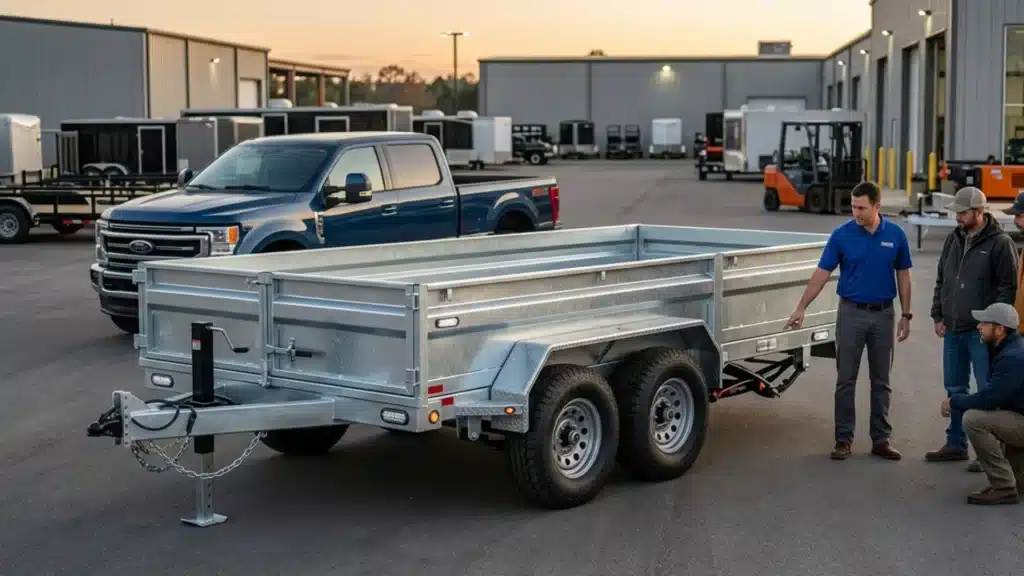
When you need to move heavy loads, a heavy-duty tandem trailer from United Trailers is one of the most practical solutions available. These tandem trailers are built for strength, balance, and everyday reliability, making them a smart choice for both commercial and personal use. Whether you’re hauling building materials, equipment, or bulky cargo, a tandem trailer can make the job safer and easier.
One of the biggest advantages of tandem axle trailers is how well they spread weight across two axles. That extra support reduces strain on the trailer, improves stability, and helps extend the life of the tyres and tandem trailer axles. For anyone who regularly carries heavy loads, that added confidence matters.
In this guide, we’ll look at the basics of tandem axle trailers, the different styles available, what to consider before buying, and where to find the right trailer near you. By the end, you’ll have a clear idea of which tandem trailer suits your needs best.
What is a Tandem Trailer?
A tandem trailer is a trailer fitted with two axles, which means it has more wheels and more support than a single-axle trailer. This design helps distribute the load more evenly, which is especially useful when you’re carrying heavier cargo. Because of that, tandem axle trailers are often the preferred option for demanding transport jobs.
The idea behind a tandem axle trailer is simple: more support means better stability and better control on the road. That’s why many people in construction, farming, and trade work rely on tandem trailers for regular hauling. Depending on your needs, you can choose anything from an open trailer to a robust tandem axle box trailer.
A well-built tandem trailer also handles rough conditions better than lighter setups. If your work takes you onto uneven ground or you need something that can take a beating, a trailer with strong tandem axles can be a worthwhile investment. It’s not just about carrying loads today, it’s about having a trailer that stays dependable over time.
Types of Tandem Trailers
There are several types of tandem trailers, and each one is suited to different kinds of work. Choosing the right one depends on what you carry most often and how you use it day to day.
- Flatbed Tandem Trailers: These open trailers are ideal for oversized or irregular loads. They’re easy to load and unload, which makes them popular for materials, tools, and machinery.
- Enclosed Tandem Trailers: These offer protection from weather and road debris, making them a good option for valuable or sensitive cargo.
- Tandem Axle Box Trailers: A versatile choice for general use. It gives you the practicality of a box-style trailer with the strength of dual axles, making it a highly sought-after style for buyers checking trailer listings.
- Tipping Tandem Trailers: These are designed for easy unloading of loose materials like soil, gravel, or sand. A galvanised tandem tipper trailer can be especially useful if you want added protection against rust and wear.
Tip: If you want something simple and adaptable, a basic tandem axle trailer may be enough. However, if you need maximum durability for harsh environments, a galvanised tandem trailer is often the better long-term choice.
Benefits of Using Tandem Axle Trailers

There are good reasons why tandem axle trailers remain so popular. They offer a strong balance of capacity, stability, and durability, which makes them practical for a wide range of jobs:
- Increased Load Capacity: Two axles let the trailer carry significantly heavier loads than a single-axle setup.
- Better Stability: The extra axle support helps reduce sway and improves handling, especially on highways or rough terrain.
- Improved Durability: A properly built tandem trailer is inherently more robust and longer-lasting than lighter alternatives.
- Even Weight Distribution: Because the load is spread more evenly, there’s less pressure on individual parts, protecting the trailer axles and improving overall performance.
Factors to Consider When Buying a Tandem Trailer
Buying a tandem trailer is a long-term investment, so it helps to think carefully before choosing your model.
- Load Capacity: Always ensure the trailer can legally and safely handle the weight you plan to carry. It’s usually better to choose a trailer with slightly more capacity than you think you need.
- Trailer Size: Standard dimensions suit different fields of work. Smaller profiles are easier to manoeuvre, while larger models give you more room for bulky equipment.
- Material and Finish: Steel trailers offer exceptional core strength, while a hot-dipped galvanised finish provides superior resistance to rust and corrosion.
- Braking System: Heavy loads need reliable stopping power. Check whether the model uses mechanical override brakes or fully integrated electric brakes.
- Budget: Prices vary based on size, finish, and custom features. It’s wise to cross-compare direct manufacturer options to find the best value.
Comparing Popular Sizes: 8×5, 10×5, and 12×6 Tandem Trailers
Choosing the right trailer size comes down to how much volume you need to carry and your vehicle’s towing capacity. Below is a breakdown of the most common configurations:
| Trailer Model | Pros | Cons | Best Used For |
| 8×5 Tandem Trailer | Compact, highly manoeuvrable, easy to store, and effortless to tow. | Limited physical bed space for oversized or long materials. | Personal tasks, light commercial trades, and general junk removal. |
| 10×5 Tandem Trailer | Provides an ideal middle ground between overall length and cargo volume. | Can feel slightly awkward in tight residential driveways. | Landscapers, construction workers, and moving mid-sized equipment. |
| 12×6 Tandem Trailer | Massive load floor area, exceptionally strong, and built for maximum capacity. | Requires a powerful tow vehicle and more storage real estate. | Heavy commercial hauling, transporting machinery, and bulky cargo. |
Where to Buy Heavy-Duty Tandem Trailers Near You
Finding the right place to buy a trailer matters just as much as choosing the trailer itself. A reliable seller can help you find the right fit and give you more confidence in your purchase.
- Direct from Manufacturers: Buying directly gives you more control over exact specifications, build quality, and direct warranty support. United Trailers is a premier option for buyers who want highly dependable, heavy-duty trailer solutions built to last.
- Local Dealerships: Physical showrooms carry a range of tandem axle configurations, allowing you to inspect the welds, chassis strength, and gate latches in person before buying.
- Online Retailers: Checking digital inventory makes it incredibly easy to compare pricing tiers, custom dimensions, and available features right from your home or office.
If you are searching locally across Australia, narrowing down your parameters to regional hubs, such as looking for specific builds in Melbourne, Sydney, or broader NSW, can help point you to local pickup points and immediate stock availability.
Top Features of the Best Tandem Trailers
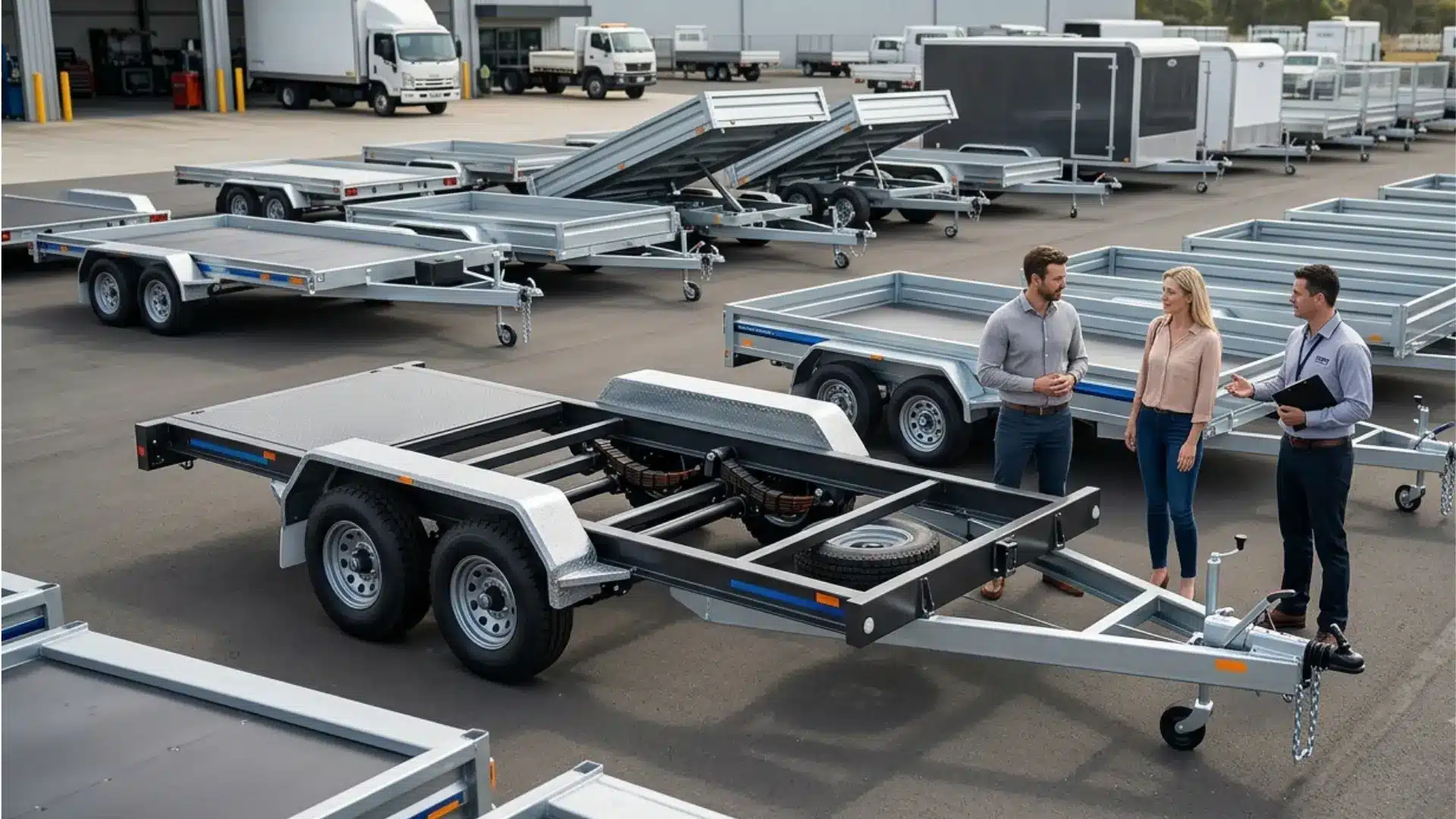
The best tandem trailers combine raw structural strength with convenient utility features. Look for these key elements when comparing models:
- Galvanized Finish: A hot-dipped galvanised coating seals the steel against water and atmospheric grime, preventing internal rust.
- Heavy-Duty Suspension: Quality leaf spring or rocker roller suspension setups smooth out road vibrations and protect fragile cargo.
- Electric Brakes: Essential for heavier weight brackets, providing responsive stopping power controlled directly from the cab.
- LED Lighting: Modern LED light packages are brighter, fully sealed against water intrusion, and far more reliable than old incandescent bulbs.
Maintenance Tips for Tandem Trailers
A tandem trailer will last for decades if you keep up with routine maintenance. Treat your trailer to regular checkups to ensure safety on the open road:
Tandem Trailer Checklist
- Regular Inspection: Check for structural cracks, surface rust, worn shackles, and loose floor bolts before and after long hauls.
- Tyre Care: Maintain correct PSI levels across all four tyres. Inspect tread depth and rotate them regularly to guarantee even wear.
- Axle Lubrication: Keep the wheel bearings and grease points on your tandem trailer axles well-lubricated to prevent overheating and failure.
- Brake Checks: Regularly test the brake controller and inspect shoes or pads, especially before hauling maximum weight limits.
- Lighting and Wiring: Clean electrical plugs and test indicators frequently to maintain high road visibility and legal safety compliance.
Conclusion: Choosing the Right Tandem Trailer for Your Needs
Choosing the right tandem trailer comes down to matching the configuration to your typical payload weights, your vehicle’s towing specifications, and your day-to-day workflow. Whether you choose a standard box model or a heavy-duty galvanised variant, prioritizing structural integrity always pays off in the long run.
A premium trailer should pull smoothly, handle off-camber weight shifts comfortably, and stand up to harsh weather. If you want a platform that pairs structural design with long-term durability, exploring the lineup at United Trailers provides an exceptional benchmark for your search.
Ready to secure a trailer engineered for the toughest jobs? Contact United Trailers today to speak with an expert, request a quote, or find a heavy-duty model tailored to your exact requirements.
FAQ
What is a tandem trailer used for?
A tandem trailer is used for transporting heavy loads, equipment, materials, and bulk cargo with improved stability and weight distribution.
A tandem axle trailer offers better load support, stronger balance, and more reliable performance for heavy-duty towing.
The best size depends on your needs. An 8×5 tandem trailer suits smaller loads, while a 10×5 tandem trailer or 12×6 tandem trailer is better for larger transport jobs.
Yes, galvanised tandem trailers are more resistant to rust and corrosion, making them ideal for long-term use and tough weather conditions.
A tandem axle box trailer is a practical trailer style used for everyday hauling, tools, building materials, and general cargo transport.